01 / Patrol
Mobile patrol
Unscheduled visits by marked patrol cars, each one logged.
View details
Guide
Continuous presence or periodic, unpredictable checks. How to weigh the two for your property.
Request a quoteCall (650) 457-8658
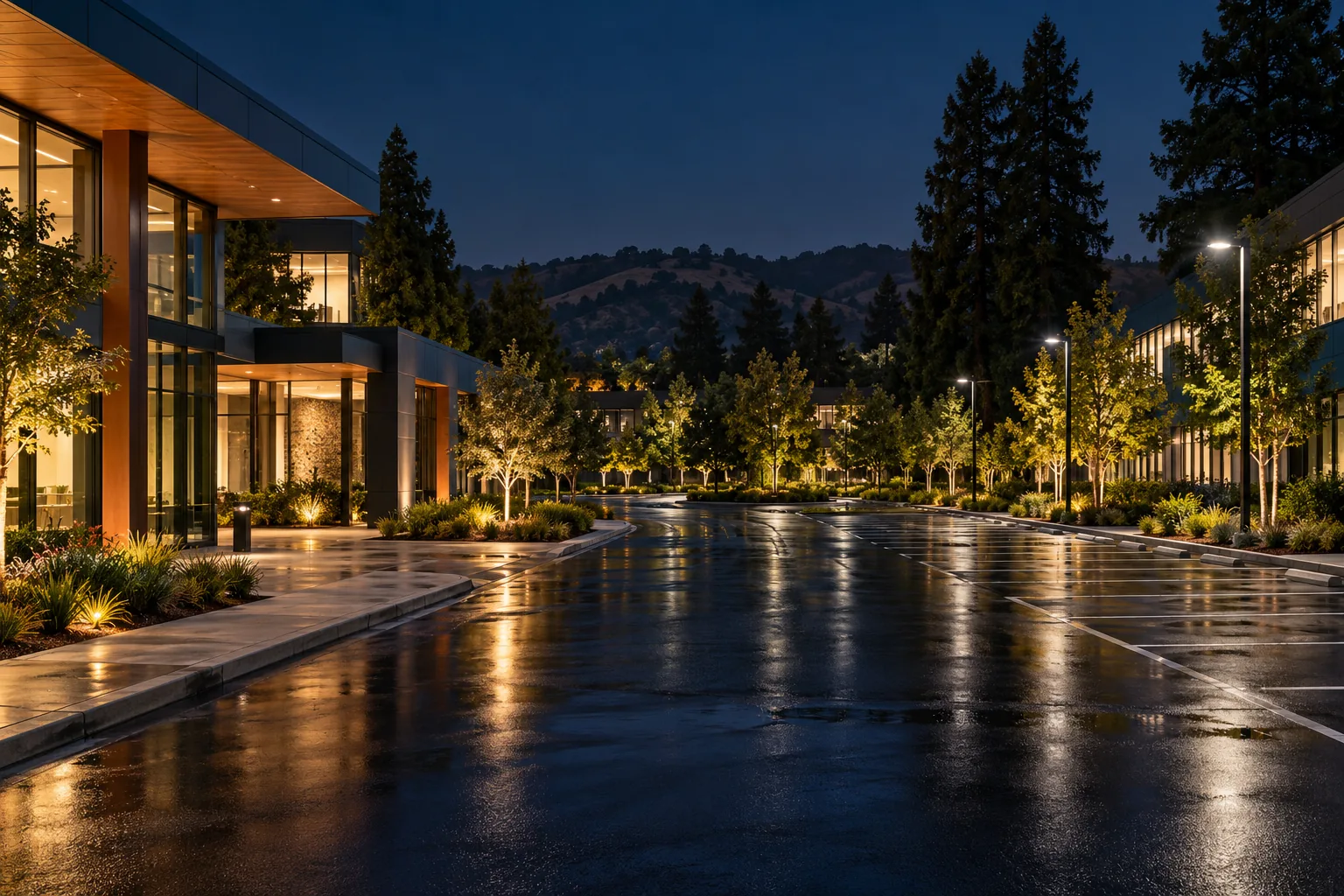
A posted officer remains on the property for the entire shift and can act on whatever happens in real time. Mobile patrol consists of periodic visits by a marked vehicle at varied times, with each visit checking specific points and recording the result.
The first offers continuity; the second offers coverage across more hours, or more properties, for less.
Any property with people arriving and leaving after hours needs someone present: a staffed reception, a residential lobby, a campus building with late research teams. Patrol can’t manage access from outside.
A posted officer is also appropriate when the risk is elevated, such as after an incident or where valuable assets are kept on site.
Offices and shops that sit empty overnight have no one to admit and no one to assist. The requirement there is verification: entries secure, perimeter intact, nothing unusual.
Patrol provides exactly that. Officers in marked vehicles vary their timing, check defined points and log each visit. Visit frequency reflects budget and need and can be revised once reports show what’s happening.
One arrangement pairs a posted officer during business hours with patrol overnight. Another is a posted officer at a main building with patrol covering satellite properties.
Live video monitoring adds a further layer: continuous observation, with patrol dispatched when needed.
We’ll set out both options, with hours and costs, in a written quote after a free walkthrough. Because coverage runs month to month, the decision can be revisited.
The documentation differs as much as the coverage. A posted officer produces a shift report that runs from start to finish: when rounds were walked, who was admitted and what happened between rounds. Patrol produces a timed log of each visit, listing the points checked and the findings at every stop. Both arrive by email, and both attach photos to any incident report.
A month of patrol logs tells you whether the visits are finding anything. A quiet log supports staying with patrol; repeated findings at the same gate point toward a posted officer, a camera on that view or both.
Picture a two-story professional office near California Avenue that closes at six. Nobody arrives after dark, so patrol visits at varied hours, with lockup confirmed on the first pass, meet the need for less than a full shift would cost.
Now take a research building in Stanford Research Park where teams work late and visitors come in for evening demos. Someone has to confirm who is entering, so a posted officer through the evening, followed by patrol once the last team leaves, matches how the building is actually used.
A storefront block on University Avenue needs attention at closing, when staff head to their cars and the street empties. An officer for the closing hour, then patrol checking rear doors and service alleys overnight, covers both moments.
The coverage chosen at the start isn’t permanent. Patrol logs that keep showing open doors, people found on site or damage in the same spot are a signal to add presence. The reverse also happens: an overnight post whose reports show months of empty corridors can give way to patrol paired with camera monitoring.
Review the reports with us every few months. The point of the documentation is to let the evidence, not habit, decide what the property gets.
A few useful answers
Patrol, in most cases, because you’re paying for visits rather than a full shift.
Yes. Month-to-month terms make changes straightforward.
Start with a pattern that covers closing, the middle of the night and early morning, then adjust once a few weeks of logs show where findings occur.
It fills the time between patrol visits. Monitors watch the chosen views live and dispatch patrol when something needs a person on site.
Yes. One route can take in each building, and the log shows the time of every stop, which suits office and research campuses with satellite buildings.
Resources
Industries
Services
01 / Patrol
Unscheduled visits by marked patrol cars, each one logged.
View details02 / On-site
Officers who manage access, know the building and keep a careful record.
View details