
Resources
Planning the hours your security covers.
A planner for choosing between a daytime post, evening and overnight coverage, or officers around the clock, built around how a Palo Alto property is used hour by hour.
Request a quoteCall (650) 457-8658
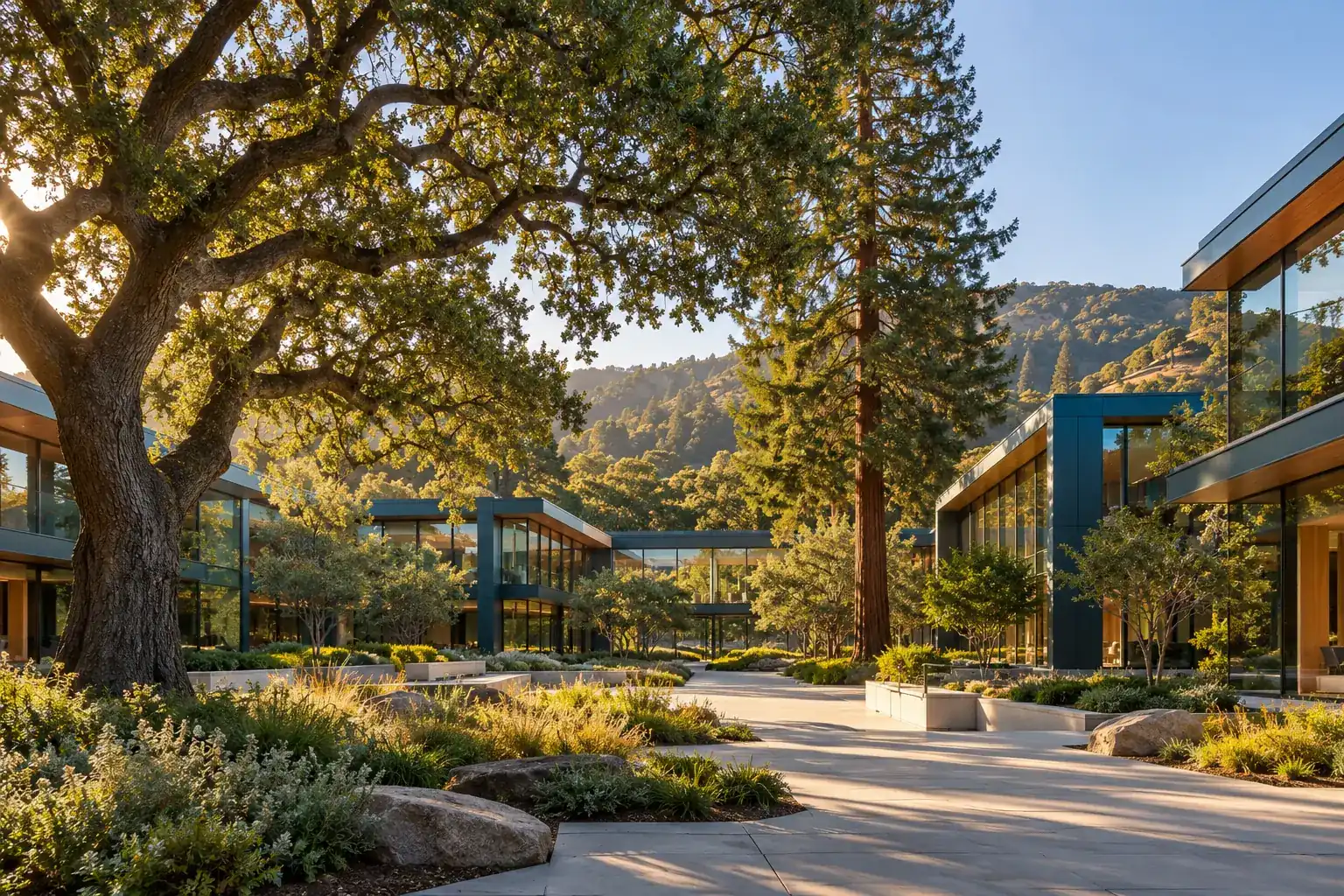
Plan from the clock first.
Most coverage questions begin with a service: a guard, patrol or cameras. A better starting point is the week itself. Lay out the 168 hours of a normal week and mark when the property is full, when it is half empty, when it is locked and dark, and when it changes from one state to another. The service follows from that map.
Those changeovers deserve the closest look. The first arrivals in the morning, the stretch when staff leave in ones and twos, the hour after a store closes, a Sunday delivery: these are the moments when doors stand open and fewer people are watching.
Mark the risk windows.
Before reading the planner below, write down the windows that apply to your site. A single page is enough; the point is to see where the exposure actually sits.
- Morning opening, from the first key in the door to a full lobby
- The working day, with its visitors, couriers and vendors
- Closing and lockup, including the last walk through the building
- Evenings when part of the building is still in use
- Overnight hours when nobody should be inside
- Weekends, holidays and planned shutdowns
- One-off periods: a construction phase, a move or a launch week
Beside each window, jot down three things: roughly how many people are on site, which entrances are open, and what has gone wrong in that window before. A window with open doors and few people is the one to cover first. A window with locked doors and nothing in the incident history can usually be covered by checks rather than a full shift.
Reading the planner.
The chart pairs common Peninsula property types and time windows with three coverage options. Find the row closest to your site, then read across. Where a cell names patrol or monitored cameras, that is the usual way to cover the window without a full shift.
| Property or time window | Daytime post | Evening and overnight | Around the clock |
|---|---|---|---|
| Office with a staffed reception | Officer at the lobby desk through the workday | Lockup round, then patrol or live cameras | Rarely needed once the floors empty |
| Research building with late teams | Reception and visitor sign-in | Officer stays until the last team leaves | Fits where equipment or work runs all night |
| Apartment or condo lobby | Front desk for guests and deliveries | Garage and gate rounds after dark | Fits buildings that want a desk every hour |
| Retail center at closing time | Visible officer on busy afternoons | Closing-hour post, then overnight patrol | Seldom; cameras watched live cover quiet nights |
| Warehouse or distribution yard | Gate and dock control on shift | Yard cameras watched live between rounds | Fits yards that load and ship nonstop |
| Weekends and holiday closures | Officer only if staff or vendors come in | Patrol visits paired with monitored cameras | Short-term post during a long shutdown |
Treat the chart as a first draft rather than a verdict. A recent incident, a high-value storeroom or a building that stays partly occupied can move a property toward the around-the-clock column, and a quiet set of reports can move it back.
When a daytime post is enough.
For many offices the exposure sits at the front door during working hours: walk-ins, deliveries and guests who need to be signed in. An officer at the desk from opening to close covers that well. Once the building is empty, the need changes from managing people to confirming that nothing has changed, and mobile patrol or live camera monitoring handles that for less than a second shift.
The officer’s closing round matters here. It is the handoff from staffed hours to unstaffed ones, so the post orders should list every door, gate and light the officer checks before leaving.
When coverage should run into the night.
Extend the post when people are still coming and going after dark. A lab with late experiments, a residential garage where residents return at midnight or a retail center where staff walk to their cars after closing all need a person on site later than a nine-to-five post allows.
Extended hours also make sense for a stretch after an incident, or while the building holds something unusually exposed, such as equipment staged for a move. Our guide to patrol versus a posted officer helps decide whether those late hours need a full post or a pattern of visits.
When around-the-clock officers fit.
Some sites never fully empty, and some can’t afford a gap of even a few hours. Residential buildings that want a staffed desk at every hour, operations that load and ship through the night and properties recovering from a serious incident are the usual cases. Our security guard services run from business-hours posts up to 24-hour posts, staffed in shifts with a handoff at each change.
Continuous coverage is also what a fire watch requires: a dedicated officer making rounds the whole time fire protection is impaired. That is a separate service with its own rules, and it ends when the system is restored.
Adjusting the hours over time.
Coverage runs month to month, so the hours you start with are not the hours you are tied to. Review the shift reports and monitoring write-ups every few months and look for windows that stay quiet or keep producing findings. A window that has been quiet for a season is a candidate for fewer officer hours; one that keeps appearing in the reports is where the next hours should go. Busy seasons, a product launch or the days after a break-in can be covered with temporary security guards on short notice, then dropped. To map your own week, book a free walkthrough; the written quote sets out the hours for each post and visit.
A few useful answers
Common questions
Is round-the-clock coverage necessary for our building?
No. Around-the-clock officers fit sites that are occupied or highly exposed at every hour. Most offices and shops pair a daytime post with patrol or live camera monitoring once the building is empty.
What covers the hours when no officer is posted?
Mobile patrol visits at varied times, live monitoring of your cameras and alarm response. A plan often combines two of them so a person can reach the site when the cameras see something.
How should a post’s start and end times be set?
Around the changeovers. Start the post before the first arrivals and end it after the closing round, so the officer is present for both the opening and the lockup.
Can coverage hours change with the seasons?
Yes. With month-to-month terms, you can add hours ahead of a busy season or a holiday shutdown, cut them back once it passes, and bring in temporary officers for short-notice gaps.